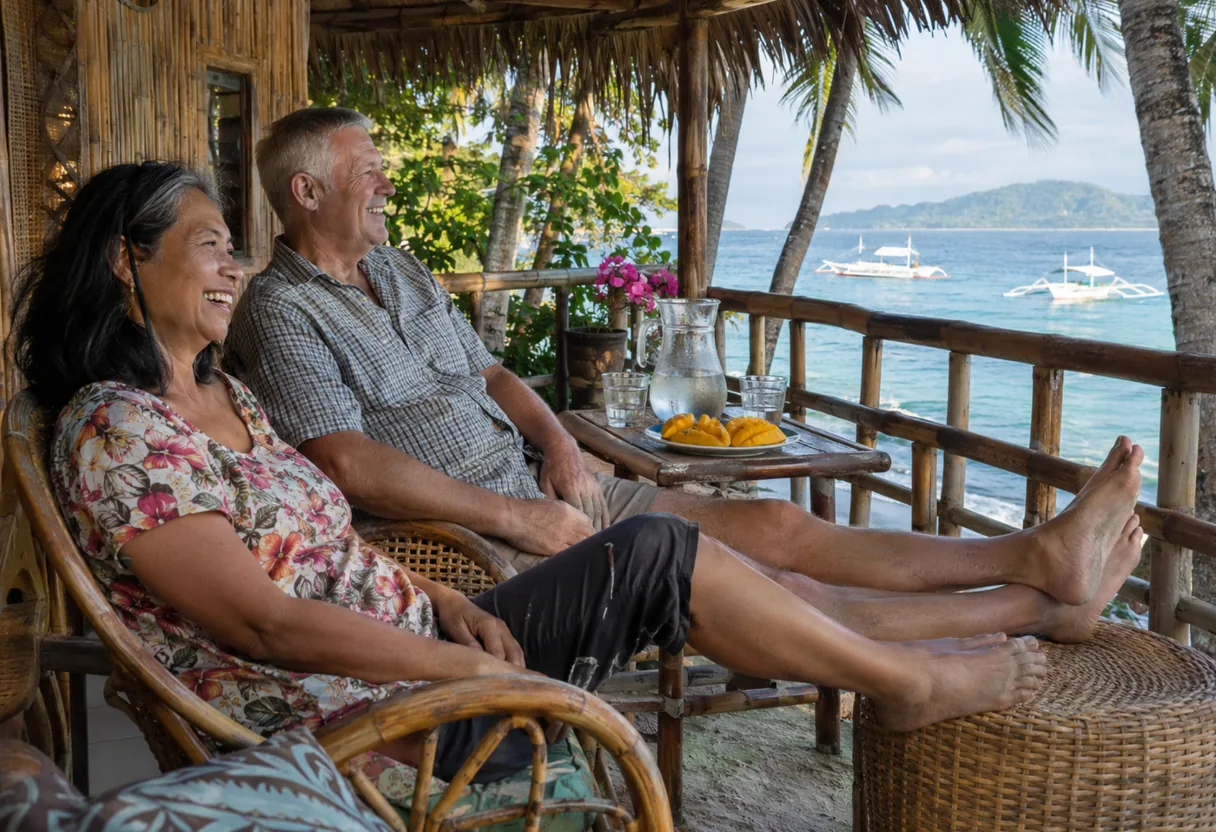
The Philippines retirement visa for Americans is the Special Resident Retiree's Visa (SRRV). As of November 2026, a 50-plus American with a lifetime pension of at least $800 a month parks a $15,000 deposit in a Philippine bank, pays a $1,500 processing fee and $360 a year, and can then live in the country indefinitely. Without a pension the deposit doubles to $30,000, and the money comes back if you ever leave the program.
Every figure below comes from the Philippine Retirement Authority's SRRV page and its servicing pages, checked on November 2, 2026. Several popular guides still quote older numbers, so check the PRA page again before you wire anything.
Why this visa is such a good deal
Most retirement visas test your income every year or make you renew every 12 months. The SRRV works differently: you put money on deposit once, pay a modest yearly fee, and you're in. The PRA describes it as permanent residency with multiple entry and indefinite stay.
That matters for the "live like a king" math. A Social Security check that barely covers rent in many US cities goes a long way on an island where a housekeeper, fresh seafood dinners and an ocean view are normal parts of expat life. The visa takes the immigration hassle out of that picture: no tourist extensions, no border runs, no yearly fight to prove your income. If you're still choosing a country, start with our list of the cheapest places to retire abroad and the rest of our Live Abroad guides.
SRRV options and deposit amounts in 2026
The PRA's current page lists two main options: SRRV Classic and SRRV Courtesy. The Smile and Human Touch options that older articles still describe are not on it. Principals must be at least 40.
| Option | Who it's for | Deposit, age 50+ | Deposit, age 40-49 | Annual fee |
|---|---|---|---|---|
| Classic, pensioner | Anyone with a lifetime pension of $800/month single or $1,000/month with dependents | $15,000 | $25,000 | $360 |
| Classic, non-pensioner | Anyone without a qualifying pension | $30,000 | $50,000 | $360 |
| Courtesy, foreign nationals | Retired diplomats, officers of international organizations recognized by the DFA, retired military from countries with recognized bilateral relations, high achievers | $1,500 | $3,000 pensioner, $6,000 non-pensioner | $100 |
| Courtesy, former Filipinos | Filipinos naturalized elsewhere who have not reacquired Filipino citizenship | $1,500 | $3,000 | $50 |
Source: PRA SRRVisa page, as of November 2026. Each annual fee covers the principal plus two dependents. Classic adds $100 a year for each dependent beyond two, and Courtesy adds $10.
The pensioner route is the sweet spot
For most American retirees, Classic as a pensioner is the one to price out. The pension has to be for life, so think Social Security, a military retirement or a defined-benefit pension, and confirm with the PRA that your proof qualifies. A couple qualifies on the $1,000 figure, since the principal then has a dependent. The difference between the pensioner and non-pensioner deposits is $15,000 that stays in your own pocket.
What it costs in year one and over five years
Two kinds of money are involved. Fees are gone once you pay them. The deposit is parked in a PRA-accredited bank and comes back when you cancel. The PRA posts monthly interest rates for deposit placements on its interest rate page.
| Applicant | Deposit (refundable) | Year-one fees | Fees over 5 years |
|---|---|---|---|
| Single pensioner, 50+ (Classic) | $15,000 | $1,860 ($1,500 + $360) | $3,300 |
| Couple, principal with pension, 50+ (Classic) | $15,000 | $2,160 ($1,500 + $300 spouse + $360) | $3,600 |
| Single non-pensioner, 50+ (Classic) | $30,000 | $1,860 | $3,300 |
| Retired military, 50+ (Courtesy) | $1,500 | $1,600 ($1,500 + $100) | $2,000 |
Fees are PRA figures as of November 2026: a $1,500 processing fee per principal, $300 per joining dependent, and the annual fee paid on joining and every year after. Budget extra for your medical certificate, police clearance, apostilles, passport photos and courier costs, which vary by state. A family with more than two dependents adds $15,000 of deposit for each extra one (former Filipinos excepted).
Philippines retirement visa requirements for US citizens
You apply from inside the Philippines, so you arrive as a tourist first. The PRA's checklist for a principal applicant:
- Passport with a valid tourist visa that has at least one month left while the SRRV is processed. Extend it if it runs out.
- PRA application form.
- Medical certificate issued within six months before you submit.
- Police clearance from your country of origin or the country you lived in for the last six months, issued within six months.
- Bureau of Immigration Clearance Certificate, plus an NBI clearance if you've been in the Philippines more than 90 days before applying.
- Eight 2x2-inch photos on a white background, taken within three months.
- Proof of a lifetime pension if you apply as a pensioner, or proof of qualification for Courtesy.
- Bank certificate showing your deposit arrived as an inward remittance from a bank abroad.
Documents issued in the US must be apostilled. A spouse needs a passport, application form, PRA medical certificate, police clearance, an apostilled marriage certificate, photos and the $300 dependent fee. Spouses and unmarried children under 21 can join with the first application or later.
You'll carry a thick stack of apostilled originals across the Pacific.
How to send the deposit
- Pick an accredited bank. The government option is the Development Bank of the Philippines. Private options listed by the PRA include PNB, Unionbank and Bank of Commerce (all branches), two BDO branches, KEB Hana Bank Manila and Shinhan Bank Manila.
- For a private bank, get a Letter of Introduction from the PRA first by emailing [email protected] with the bank, branch, SRRV option, amount and your passport bio page.
- Wire the money from a bank abroad. For DBP, the remittance purpose should read "SRRV deposit of" your full passport name, with your date of birth and passport number.
- Wait for the bank certificate. DBP sends PRA a notarized certificate in 7 to 10 working days; private banks take 3 to 5 banking days.
- File the application and pay the $1,500 fee in dollars or the peso equivalent.
Turning the deposit into a condo
Classic holders can put the deposit to work. Per the PRA servicing page, it can be converted into a condominium unit in the principal's name with a sale price of at least $50,000 or the deposit amount, or into a long-term lease of a house, townhouse or condo. The title carries a PRA restriction while you hold the visa. That turns parked cash into a sea-view place to live.
SRRV benefits and the ID card
Once approved, the PRA lists these benefits:
- Permanent residency with multiple entry and indefinite stay.
- Exemption from Philippine tax on pensions and annuities.
- No Bureau of Immigration annual report, no ACR I-Card and no exit and re-entry permits.
- No travel tax, and no separate work or student visa or permit.
- A one-time duty-free import of household goods and personal effects up to $7,000.
- A special PhilHealth insurance rate and discounts at PRA merchant partners.
Your PRA ID card is valid for two years under PRA Circular No. 004 of June 30, 2025. Renewal can be done in person, by courier or by email to [email protected], and since October 2025 the PRA requires a new photo at every renewal (see the ID services page). When you renew your US passport, the SRRV sticker is restamped into the new one for $10 to the PRA plus PHP 1,010 to the Bureau of Immigration.

Is the SRRV deposit refundable?
Yes. If you cancel, the PRA's process ends with the deposit wired to your nominated bank account. Cancellation costs $10 to the PRA and PHP 1,000 to the Bureau of Immigration per person. If you're still in the country and downgrade to a tourist visa, add $10 and PHP 5,520. If you used the duty-free import and cancel within three years of getting the visa, the PRA asks for a certificate of payment or bill of lading.
US taxes, Social Security and other checks
- US taxes don't stop. The IRS says US citizens are taxed on worldwide income and file the same way abroad. The SRRV pension exemption covers Philippine tax only.
- Getting paid. See our guide on how to collect Social Security abroad before you move your benefit.
- Safety. The US Embassy in Manila shows a Level 2 advisory, "Exercise increased caution," citing crime, terrorism, unrest and kidnapping, with higher risk in some areas. Read the full advisory before choosing where to live.
Skip the SRRV if
- You're under 40. The PRA's minimum age for principals is 40.
- You want a short trial first. Spend a season on a tourist visa before you lock up $15,000 or more.
- You'd rather keep every dollar liquid. The deposit can only be withdrawn by canceling, or used for an approved condo or lease.
- You're comparing Asia. Thailand's retirement visa rules and Malaysia's MM2H are worth a look, and Latin America's Panama pensionado visa uses an income test instead of a deposit.
This page is general information, not legal or tax advice. Confirm the current rules with the PRA (servicing line +632 8848 1411) before you apply.