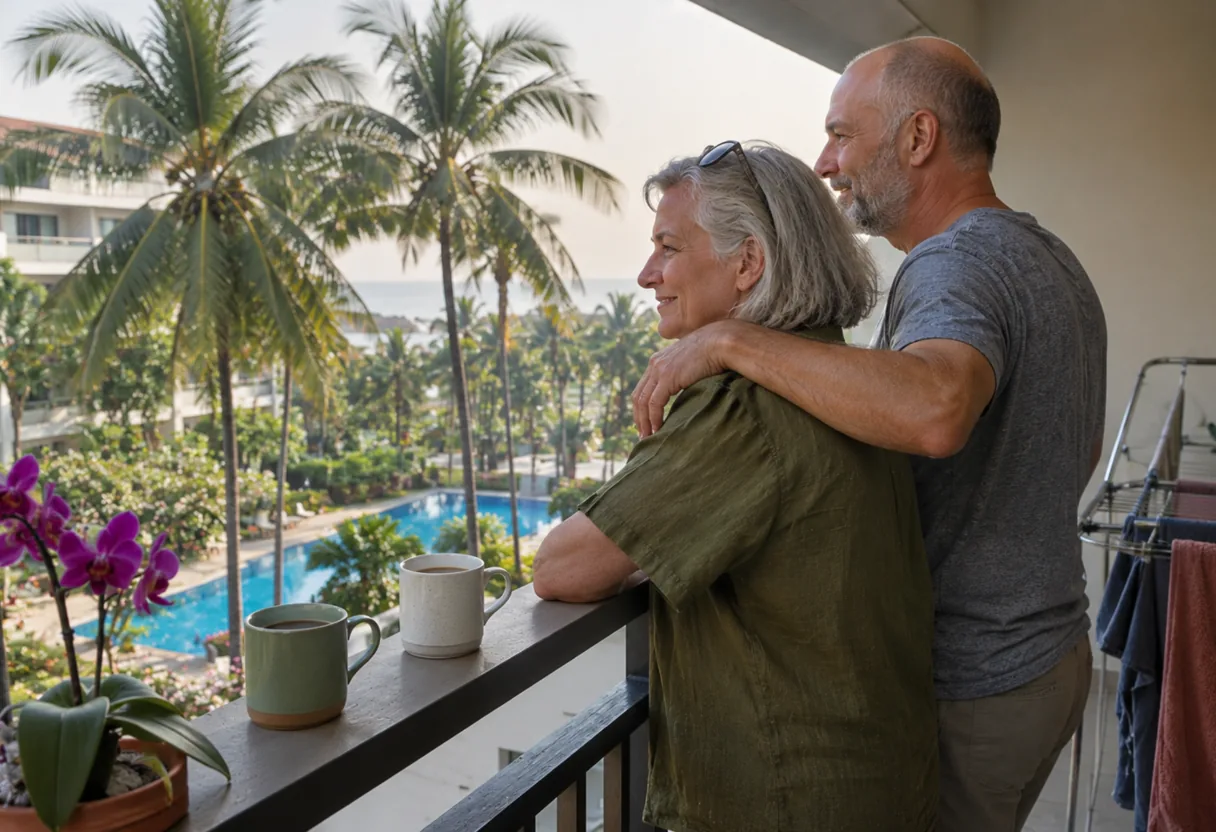
Yes, you can live in Thailand on Social Security, and live well. On a $2,000 check, a single retiree can rent a city-center one-bedroom, eat out often and get around for about $825 to $1,140 a month in Chiang Mai, Hua Hin or Bangkok, leaving $860 to $1,175 for health insurance, travel and savings. The catch is the retirement visa: its 65,000-baht monthly income rule sits just below a $2,000 check.
Below is the month line by line in all three places, then the visa math, how the money reaches Thailand, and the four spots where a Social Security budget runs short. Prices come from livingcost.org, updated June 21, 2026. Dollar-to-baht figures use the Federal Reserve's H.10 rate of 33.76 baht per dollar on October 23, 2026, so a $2,000 check is about 67,500 baht.
What $2,000 a month buys in Bangkok, Chiang Mai and Hua Hin
This is the comfortable version for one person: a one-bedroom in the city center (livingcost.org's 40 m², about 430 sq ft, figure), not a cheap room on the edge of town.
| Single person, per month | Bangkok | Chiang Mai | Hua Hin |
|---|---|---|---|
| 1-bedroom, city center | $606 | $452 | $515 |
| Utilities | $60 | $39 | $47 |
| Internet (50 Mbps+) | $18 | $19 | $19 |
| Food (groceries and eating out) | $308 | $237 | $256 |
| Transport | $148 | $79 | $28 |
| Total | $1,140 | $825 | $865 |
| Left from $2,000 | $860 | $1,175 | $1,135 |
Source: livingcost.org city pages for Bangkok, Chiang Mai and Hua Hin, June 2026. Crowd-sourced averages, so treat them as a starting point.
Want the money to go further? The same pages list a cheaper one-bedroom at $294 in Bangkok, $258 in Chiang Mai and $334 in Hua Hin. Taking one of those frees up another $180 to $310 a month. A set lunch costs about $2 in Chiang Mai and a little over $3 in Bangkok and Hua Hin.
These figures cover a local-style budget with a Western apartment. Expats who live closer to home habits spend more: Nomads.com puts a typical expat month in Chiang Mai at about $1,265. That still leaves about $735 from a $2,000 check.

The three places in one line each
Bangkok costs the most but has the big private hospitals and a metro, so you never need a car. Chiang Mai is the cheapest of the three and has a large retiree community; see our full cost of retiring in Chiang Mai. Hua Hin is a beach town with the lowest transport bill, and we compare it head to head in Hua Hin vs Chiang Mai.
Can a couple live on one Social Security check in Thailand?
In Chiang Mai or Hua Hin, yes. In Bangkok, only just. This table keeps one city-center apartment, uses livingcost.org's family utility bill, and doubles food and transport.
| Couple, per month | Bangkok | Chiang Mai | Hua Hin |
|---|---|---|---|
| 1-bedroom, city center | $606 | $452 | $515 |
| Utilities (family figure) | $92 | $60 | $72 |
| Internet | $18 | $19 | $19 |
| Food for two | $616 | $474 | $512 |
| Transport for two | $296 | $157 | $56 |
| Total | $1,628 | $1,162 | $1,174 |
| Left from one $2,000 check | $372 | $838 | $826 |
$372 a month is not enough to cover two private health insurance policies for people in their sixties or seventies, so a couple on one check in Bangkok needs savings, a second income or the cheaper apartment. If both of you draw benefits, the picture changes completely: two checks put a couple in the "live like a king" bracket in any of the three.
The king's version: what extra comfort costs
Here is where Thailand gets fun. Swap the one-bedroom for a three-bedroom (80 m², about 860 sq ft) in the city center, and add regular dinners out.
| Upgrade | Bangkok | Hua Hin |
|---|---|---|
| 3-bedroom, city center | $1,118 | $916 |
| Restaurant dinner for two | about $36 each | not listed |
| Single person's month with the 3-bedroom (utilities, internet, food, transport added) | about $1,684 | about $1,291 |
Source: livingcost.org, June 2026; family utility figures used for the larger apartment.
In Hua Hin, a $2,000 check covers a three-bedroom in town with about $700 to spare. In Bangkok, the same apartment plus eight dinners out for two (about $290) uses the whole check, so the big-condo life in the capital really needs savings or a second check. International Living mentions a one-hour foot and leg massage for $4, which is the kind of everyday treat that makes a modest budget feel generous. Help at home is the other classic upgrade; we cover rates in what a maid costs in Thailand.

Does $2,000 meet the Thai retirement visa income rule?
Barely, and that is the most important number on this page. The Royal Thai Embassy in Washington lists these rules for the Non-Immigrant O-A long-stay visa, as of November 2026:
- Age 50 or older on the day you apply. The visa is valid for one year and the fee is $200.
- Money, one of three ways: a bank deposit of at least 800,000 baht (about $23,700) held for the last three months; a monthly income of at least 65,000 baht (about $1,925) shown on an original income certificate; or a deposit plus income totaling at least 800,000 baht a year.
- Health insurance for the whole stay. The page lists a sum insured of at least 3,000,000 baht or $100,000 per policy year, and Thai insurers must be on the Thai General Insurance Association's long-stay list.
- A criminal record certificate and a medical certificate, each issued within three months.
Run your own numbers. A $2,000 check is about 67,500 baht, only 2,500 baht over the line. If Medicare Part B comes out of it ($202.90 a month in 2026, per Medicare.gov), the amount that actually lands in your account is about $1,797, or 60,700 baht. A dollar that slips about 4% against the baht has the same effect. The embassy's document checklist also mentions "proof of monthly income of not less than $2,500/month" or a $30,000 balance, without explaining how that squares with the baht amounts.
That is why many people on a single check use the 800,000-baht deposit route or the combination. Ask the embassy or consulate where you will apply which figure they use for your income letter. Our Thailand retirement visa requirements guide covers extensions and the 90-day reports.
How Social Security gets to your Thai bank account
USA.gov says that if you earned benefits, "you can visit or live in most foreign countries and still receive payments." There are two ways to be paid:
- Straight to a Thai bank. SSA pays into local banks in countries that have an international direct deposit agreement with the U.S. We could not reach SSA's own country list while writing this, so check it on ssa.gov before you count on it.
- To your U.S. bank, then across. Keep your U.S. checking account, let the check land there, and move money to Thailand with a bank wire or a transfer service. This works whatever the direct deposit list says, and it keeps a dollar account for U.S. bills.
Either way you need a Thai account for rent and daily life. Wise's March 2026 guide names Kasikorn Bank (KBank), Siam Commercial Bank (SCB) and Bangkok Bank as common choices and warns that a bank may ask for a visa before it opens an account. Bring your passport and visa paperwork.
Two rules keep the money flowing. Answer SSA's questionnaire, which USA.gov says arrives every one to two years ("If you do not respond, SSA may stop your benefit payments"). And look Thailand up in SSA's Payments Abroad Screening Tool before you move. Our step-by-step guide to collecting Social Security abroad walks through both.
Where a Social Security budget runs short in Thailand
Health insurance. Medicare.gov says Medicare usually does not cover care outside the U.S. and that "Medicare drug plans don't cover prescription drugs you buy outside the U.S." (source). The visa requires private cover anyway, and premiums climb with age. Get quotes before you move and fit them into the "left over" row above. Day-to-day care is cheap: livingcost.org lists a doctor visit at about $33.
The Part B decision. Keeping Part B costs $202.90 a month in 2026 but covers you on trips home. Dropping it and signing up again later can mean a late enrollment penalty that you pay "for as long as you have Part B," per Medicare.gov. This is a personal call; talk it through with a Medicare counselor.
The exchange rate. Your income is in dollars and your rent is in baht. A weaker dollar raises every line in the tables, with no warning.
Flights home and the tax return. Budget for at least one trip home a year. You still file a U.S. return: the IRS says citizens are "subject to tax on worldwide income from all sources," and Thailand has its own rules, so see a tax professional who works with Americans abroad.
Chiang Mai air. In Chiang Mai, Nomads.com's monthly air-quality table shows an average AQI of 154 in April and 139 in January, against 32 to 37 in June through August. Plenty of retirees spend the smoky months at the beach in Hua Hin.
A simple plan before you commit
| Step | What to check |
|---|---|
| 1. Your real check | Your benefit after any Part B deduction, from your my Social Security account |
| 2. Visa route | Whether your income letter clears 65,000 baht, or whether you will use the 800,000-baht deposit |
| 3. Insurance quote | A long-stay policy that meets the embassy's coverage rule, priced at your age |
| 4. Trial stay | One to three months in a furnished rental, ideally in the season you would dread most |
| 5. Cushion | Savings for a flight home and a medical bill, kept in dollars |
Fill in your own figures with our retirement budget worksheet, and compare Thailand with the other places on our Live Abroad hub. This page is general information, not financial, tax or legal advice.